
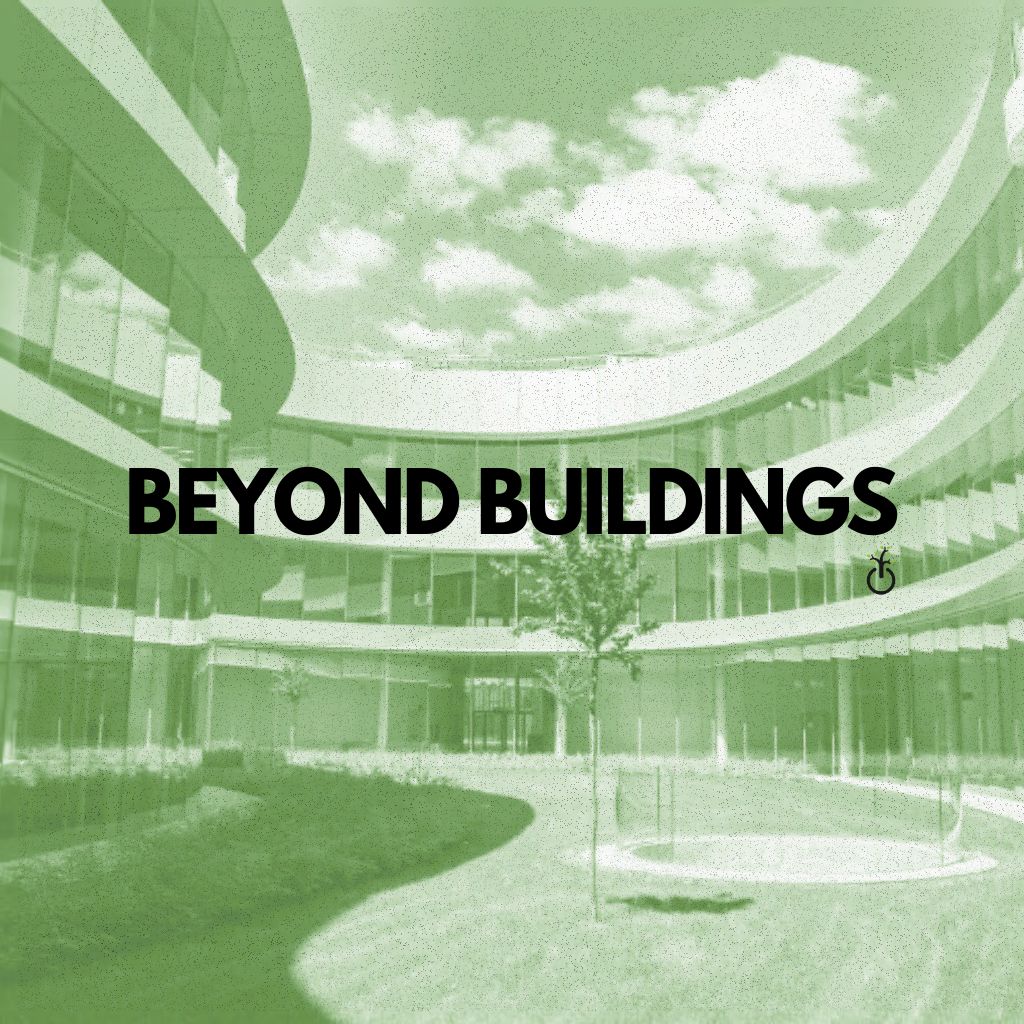
Milan is a city that never rests: fast-moving, ambitious, and always on the rise. The city pulses with trams, metros, scooters, and crowds rushing between offices, universities, events, and bars. Milan is also, however, one of Europe’s densest and most urbanized centers, with all the problems that come with it, namely, air pollution (among the highest PM2.5 levels in Europe), noise pollution, and increasingly frequent summer heatwaves that reach temperatures of 33–36°C.
University life at Bocconi is just as intense, defined by quick walks between classrooms, long nights in the library, and busy cafeterias across campus. In this fast-paced environment, it is easy to overlook the quieter parts of campus: the patches of grass where students eat lunch behind Velodromo, the tree-lined pathways near Pensionato, or Parco Ravizza just steps away. Despite often being treated as extras, researchers increasingly highlight the contribution of these green spaces to students’ health, happiness, and academic performance. In short: the greener the campus, the better the students.
Nowadays, university campuses, especially ours, function like small cities. They contain housing, workplaces, cultural venues, and transport networks, offering everything students need. Like cities, they shape the daily lives of their “inhabitants.” For the Bocconiani living on or near campus, most of their time is spent within this environment. When exposure to sunlight, biodiversity, and greenery is limited for weeks at a time, the effects can be detrimental. A growing number of universities worldwide have begun integrating nature into their designs to create healthier, calmer student communities.
A study from the University of Illinois found that students who looked at a natural scene for just 40 seconds performed significantly better on attention tests than those who viewed a concrete environment. Similarly, research published in the Journal of Environmental Psychology shows that students with access to biodiverse campus greenery report lower academic stress and greater emotional well-being. As levels of student stress and burnout continue to rise, university counseling services alone cannot solve the problem. Making campuses greener may serve as another preventive tool to support student well-being.
Attention Restoration Theory explains that natural environments engage our minds in a gentle, effortless way, allowing our directed attention—needed for studying—to recover. Students who take breaks, or even study, surrounded by nature show improved concentration, better working memory, enhanced creative problem-solving, and the ability to stay focused during long academic sessions. In a rigorous academic environment like Bocconi, encouraging exposure to nature is not only advisable, it is strategic.
A demanding academic setting such as Bocconi, where workloads are massive and competition is incessant-with deadlines coming relentlessly-nature might well be the means by which stress is taken off. A short break in nature, perhaps a few moments outside gazing at some greenery or studying under the benefits of natural light, will reduce one’s stress hormone level and anxiety, allowing students to restore mental energy. Green spaces make it easy for students to find quick ways during their day to take time that may more effectively prevent burnout compared with counseling services. More natural spaces on a campus work somewhat like early mental health support-before stress has developed into such a big problem-that keeps balance in students’ lives. Other research findings indicated that exposure to nature led students to use less student support services and felt more emotionally resilient.
Green spaces also encourage physical activity. Students are far more likely to walk or bike between buildings when pathways are tree-lined and shaded, even in Milan’s increasingly hot summers. Nature also moderates temperatures and reduces noise and air pollution, both critical issues in Milan, which ultimately improves sleep, lowers perceived stress, and promotes more physical exercise.
Many universities around the world have already adopted ambitious strategies to make their campuses greener, demonstrating that such a model is not just theoretical but practical and effective. Stanford University in the United States, for example, has committed to net-zero emissions and runs one of the largest campus solar-energy programs globally. Combined with energy-efficient buildings and waste-reduction policies, Stanford has dramatically cut its carbon footprint. Another example is the University of British Columbia (UBC) in Canada, which uses its campus as a “living lab.” Beyond green and energy-efficient buildings, UBC integrates sustainable transportation, biodiversity conservation, and energy-saving measures. These examples show that campuses can evolve from concrete-dominated spaces into ecologically healthy environments.
Not all parts of Bocconi’s campus have equal access to greenery. Buildings such as Leoni, SDA, and Pensionato feature much more abundant green spaces. Meanwhile, Velodromo, Roentgen, and especially Bunker remain largely paved and, in many cases, have low natural light exposure. Universities must ensure that this process of “campus greening” is carried out in an equitable way. While many improvements have been made across Bocconi’s campus, it is up to the university to place green spaces where students, staff, and professors are able to benefit from them the most.
Green spaces should be treated as essential infrastructure, and Bocconi could set an example for other universities in Italy and Europe. The university could connect buildings through green corridors, incorporate nature views into indoor study spaces in Roentgen or Leoni, and build biodiversity gardens atop shaded courtyards or in unused paved areas, possibly around Gud. These initiatives would allow Bocconi to maintain its identity as a forward-looking, sustainability-oriented institution while better supporting student well-being.
Bocconi is not only about lectures, assignments, and exams. It is a living ecosystem that shapes how students feel, connect, and learn every day. In a city like Milan, creating a nature-positive campus is not a luxury but a responsibility. Enhancing greenery on campus must be made an immediate priority, with the recognition that such changes are not sunk costs but investments in the long-term well-being of both students and the university itself.
Written by Khanh Chuc Ngo and Riccardo Pinna
References
https://doi.org/10.1016/j.jenvp.2021.101706
https://doi.org/10.1016/j.jenvp.2015.04.003
https://doi.org/10.1016/0272-4944(95)90001-2
https://doi.org/10.1016/j.ufug.2019.126552
https://doi.org/10.1021/es903183r