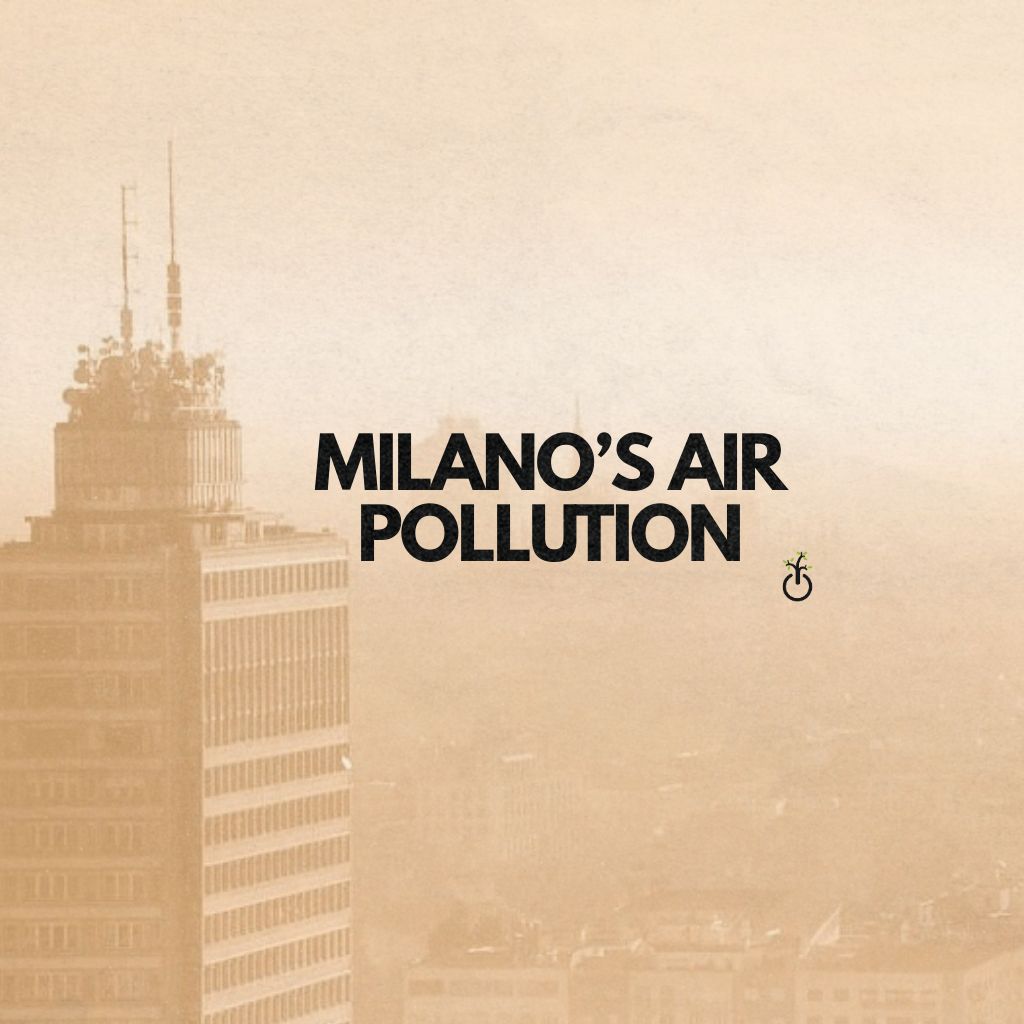
Whether you have noticed how Milan’s air quality is often ranked extremely low on the Weather App, you’ve had friends and family ask you if the air pollution in Milan is as bad as they’ve heard, or you have seen the haze and smog settling around our city yourself, there is no doubt that Milano’s air pollution is truly infamous. In fact, based on reports from October 2025, Milano consistently ranks in the top ten most polluted cities in the world, ranking only under cities in Bangladesh and Pakistan, being the only country in the developed world to have such unhealthy air quality. Milano’s air quality is often deemed “unhealthy” by rankings, with air pollution primarily stemming from PM2.5 particles in the air. This air quality is particularly dangerous for high-risk individuals such as children, pregnant people, the elderly, and those with underlying health conditions. Constant exposure to low air quality can cause issues such as eye and throat irritation, and even respiratory issues for those that are more sensitive. These problems can eventually even be deadly, with poor air quality being linked to over 50,000 premature deaths in Italy in 2020. In order to prevent more premature deaths and health issues, as well as the negative climate effects of air pollution, we must act now. But, where does this air pollution actually come from and why is it so prominent in Milano?
Several underlying factors come together to create this intense air pollution problem. Geographically, Milano is located in the middle of the Po Valley, which is essentially shaped like a bowl and causes pollutants to essentially get stuck and hover over the city. When combined with the large industry that is prominent in Milano and its surroundings which produces great amount of carbon emissions and greenhouse gases, the immense NOx emissions that stem from vehicle exhaust due to the heavy traffic in the metropolitan area, and high agricultural operations and livestock farming in the area that also increase ammonia and GHG emissions, Milano’s location makes these pollutants accumulate and stagnate over the city. These pollutants (NOx, ammonia, carbon dioxide) are all classified as PM2.5 pollution, which again, is exactly what causes the dangerous health effects and also contributes to global warming and the greenhouse gas effect. Furthermore, especially in the autumn, winds and temperature inversions make pollutants get trapped closer to the ground, further contributing to air pollution and atmospheric warming. Also, as the effects of climate change continue to increase and temperatures rise while the amount of rainfall decreases, the effects of the air pollution, especially smog are exacerbated. So clearly, this is a huge issue, both for our planet and for our health. But how can we go about fixing it?
There are certain day-to-day actions all individuals living in Milano can take to try to reduce the effects and extent of the air pollution crisis. First, you can take care to only use heating and air conditioning when absolutely necessary, you can limit your vehicle usage as much as possible and opt instead to use public transportation or walk/bike, you can try to turn off your lights whenever you’re not using them, you can start eating a plant-based diet or at least reduce meat and dairy consumption, and reduce air travel as much as possible. All these small daily actions, although they may seem irrelevant, will lower your overall daily carbon footprint and the greenhouse gases you emit as an individual, thereby lowering the amount of PM2.5 emitted and overall air pollution levels in Milano. However, in order to make a fast and substantial change which is what Milano truly needs, wider, systemic change needs to occur soon. We need new governmental legislation to combat air pollution in order to improve industrial and agricultural practices, create new tax incentives and subsidies to promote renewable energy and public transportation, and create limits on vehicles on the roads. In order to promote this change, we need to use our voting rights and vote for parties that support these changes. If you are not an Italian citizen, lobbying and protesting for these changes can be just as impactful to start systemic change. This issue is extreme and needs immediate action, but together, by taking responsibility for our planet even by just changing our daily activities and working together to show our government how important it is to combat air pollution, we can tackle this issue.
Written by Maia Sikora and Thuy Duong Le
References
Frost, Rosie. “Milan Has New Rules to Improve Air Quality. But Is It Really the Third Most Polluted City Globally?” Euronews, 21 Feb. 2024, www.euronews.com/green/2024/02/22/milan-brings-in-new-rules-to-improve-air-quality-but-is-it-the-third-most-polluted-city-gl
Greenhalgh, Chris. “Love Milan, Hate the Pollution, So What Can We Do Now?” The British School of Milan Principal Blog, The British School of Milan, 2023-24, www.britishschoolmilan.com/principal-blog/article/~board/principal-blog/post/love-milan-hate-the-pollution-so-what-can-we-do-now
Iqair Staff Writers. “October 12, 2025: Milan among top 10 most polluted cities in the world.” IQAir, 12 Oct. 2025, www.iqair.com/newsroom/milano-among-top-10-most-polluted-cities-in-the-world-10-12-2025