Every time you buy a piece of meat, you are also buying land use, emissions, and invisible costs that rarely appear on the label.
It is necessary to understand what is meant by intensive agriculture. According to the Cambridge Dictionary, the term refers to farming that uses a lot of machinery, labour, and chemicals in order to grow as many crops or keep as many animals as possible on the amount of land available. This system for food provision, that developed significantly in the 20th century, is altering irreversibly the relationship between human beings and nature. It expanded mainly due to rapid world population growth that led to a consequent increase in food demand. Today, it has become an industry where animals are treated as objects, while health and sustainability are put in the background in favour of profit. By now, an unsustainable level has been reached, from both an ethical and scientific point of view.
We can analyse the impact of intensive farming through various perspectives, each highlighting different and serious consequences. First of all, the aspect which is undoubtedly most affected is the environment. According to FAO (Food and Agriculture Organization), intensive animal farming, particularly cattle farming, produces 14.5% of total global greenhouse gas emissions. Indeed, the sector is responsible for the vast part of methane and particulate matter (PM2.5) released into the atmosphere, exceeding the impact of the industrial sector.
According to FAO and Our World in Data, 50% of habitable land (80% in the US) is intended for production, of which over 75% is dedicated to animal feed, meaning an enormous amount of land is devoted to feeding livestock rather than humans. These areas for pastures and water-intensive crops are created through large-scale deforestation of rainforests. Furthermore, these crops are mainly monocultures which cause a silent destruction of habitats, huge biodiversity losses, and are a threat to the survival of many species, as well as water pollution due to the heavy use of fertilizers and other chemicals, that leads to eutrophication and acidification of essential freshwater resources.
Another of the consequences, often overlooked, of intensive farming is the threat to human health. The extremely high density of genetically similar animals facilitates the spread of viruses and significantly increases the risk of zoonoses (diseases jumping from animals to humans). Additionally, the preventive use of antibiotics to keep animals alive in these conditions has led many people to develop antibiotic resistance, one of the most alarming health emergencies (defined as a silent pandemic by the WHO, World Health Organization), which provokes the death of thousands of people every year from infections that are no longer treatable. Moreover, the WHO and IARC (International Agency for Research on Cancer) have directly linked meat consumption to diseases such as obesity and diabetes, classifying processed meats as Group 1 carcinogens.
Finally, perhaps the most controversial aspect is the cruelty towards the animals. From a scientific standpoint, many studies have confirmed that animals experience emotions such as fear and pain in ways comparable to humans. From an ethical viewpoint, this raises the issue of treating sentient beings as mere objects; for example, animals are often brutally transported from one farm to another, deprived of water and space, and many live all their lives confined in cages (60% of all mammal biomass on Earth consists of livestock kept in facilities). This is very far from the idyllic image of the “traditional farm” promoted by advertising.
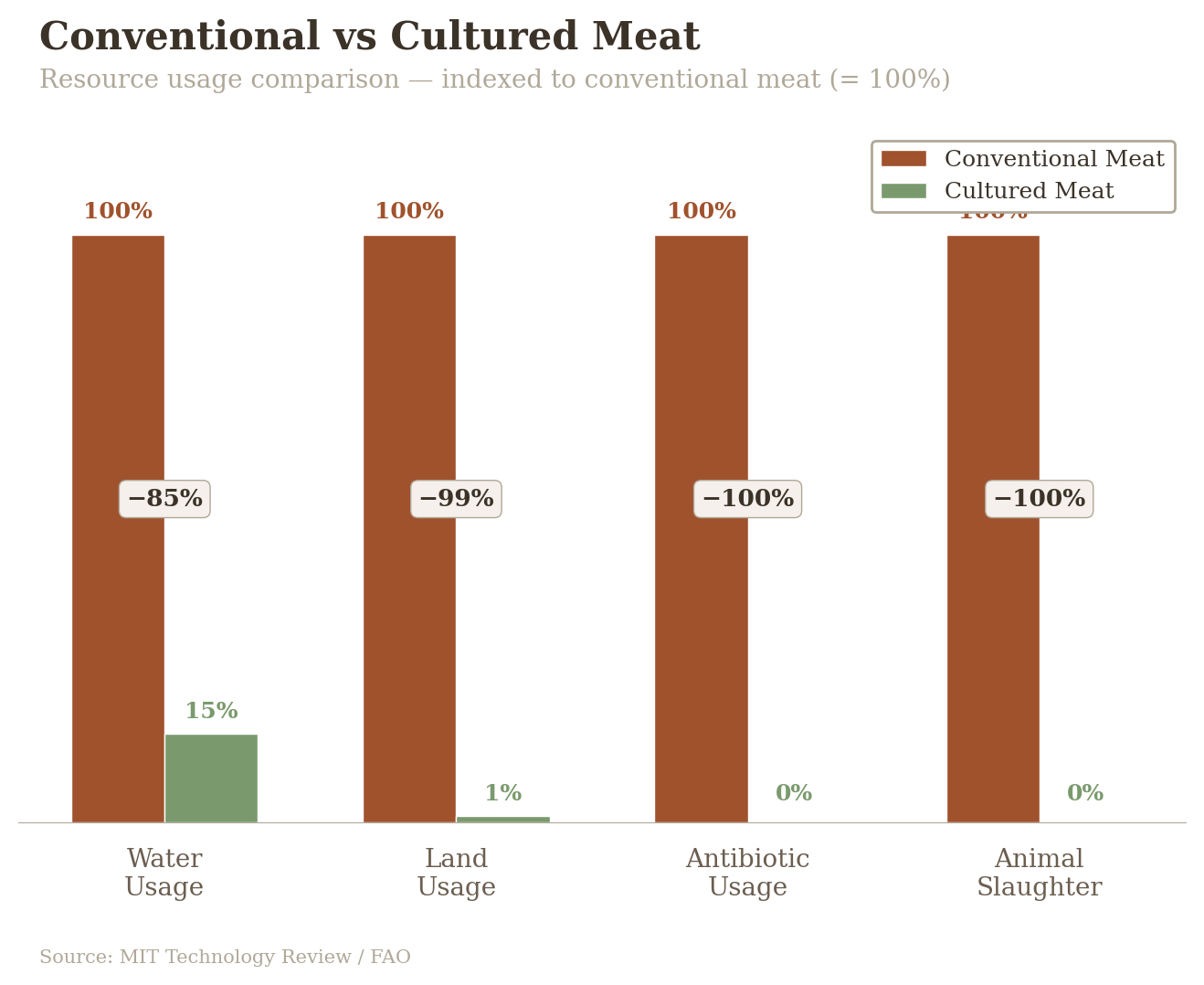
Given these concerns, it’s natural to ask how we could improve these issues of food production. One viable solution is moving toward more sustainable forms of farming, for example going back to a more local, biological husbandry, respectful of animals and conscious with regard to our health. Combined with that, innovations like synthetic (in-vitro, produced from stem cells) meat are a viable and sustainable alternative. Research shows, indeed, that despite the rise in energy usage, it requires 85% less water and 99% less land compared to normal meat, while eliminating the need for antibiotics and slaughter.
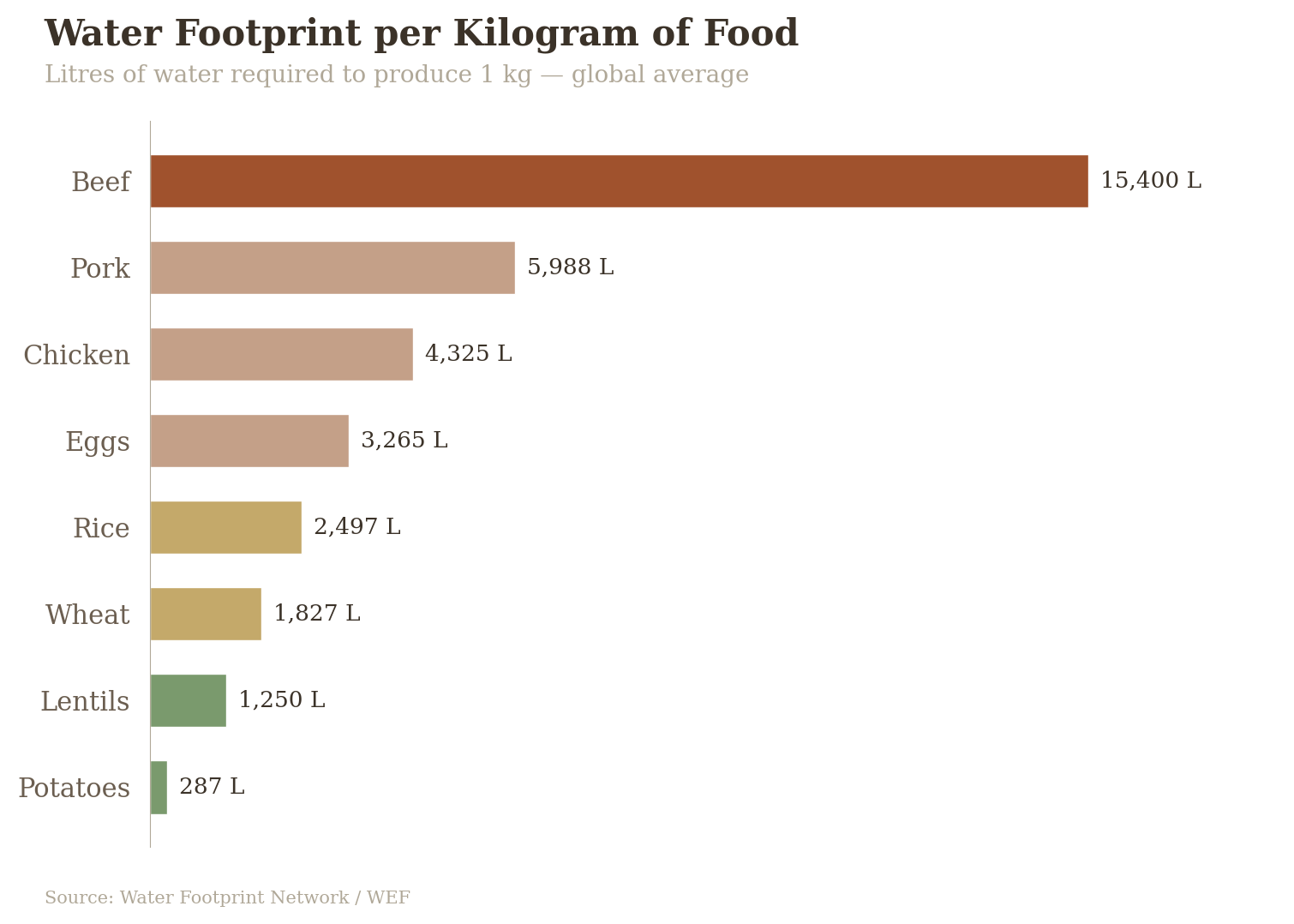
Consumers also have an important role to play: making more conscious choices would create advantages not only for the planet but also for our well-being. To give an example of the impact we can have: to produce just 1 kg of beef, on average 15,400 litres of water are required. In contrast, the same amount of land used to grow meat can produce five times more protein if used for cereals and ten times more if used for legumes.
Changing some of our habits, for example reducing the consumption of meat and moving toward a plant-based diet, would decrease land use by 75% and at the same time eliminate a lot of the possible negative effects on our health.
As consumers, we have a significant influence: the market is not only made by supply but also by demand, therefore we should all play our part.
Despite the overwhelming amount of scientific evidence, this systemic exploitation still has not decreased. This happens because this sector is maintained through massive public subsidies (⅔ of agricultural funding) and helped by government regulations, like Italy’s, which banned innovations such as cultured meat, citing “tradition.”
This is also due to the spread of industry propaganda, which has created an image of “bucolic farms” that does not reflect the state of farms nowadays, characterised by unhygienic, cramped, and often violent environments. These situations are well documented by independent organisations that, however, cannot compete with industrial giants supported by powerful lobbies that keep delaying climate action. Yet, even though designed for efficiency, scientific evidence underlines that the current intensive farming model is now unbearable for our world.
Written by Gioia Chiettini
References
https://ourworldindata.org/global-land-for-agriculture
https://www.fao.org/4/i3437e/i3437e.pdf
https://www.fao.org/3/Y3542E/y3542e06.htm
https://www.conaf.it/wp-content/uploads/2015/02/Centro-Studi-per-EXPO2015.pdf