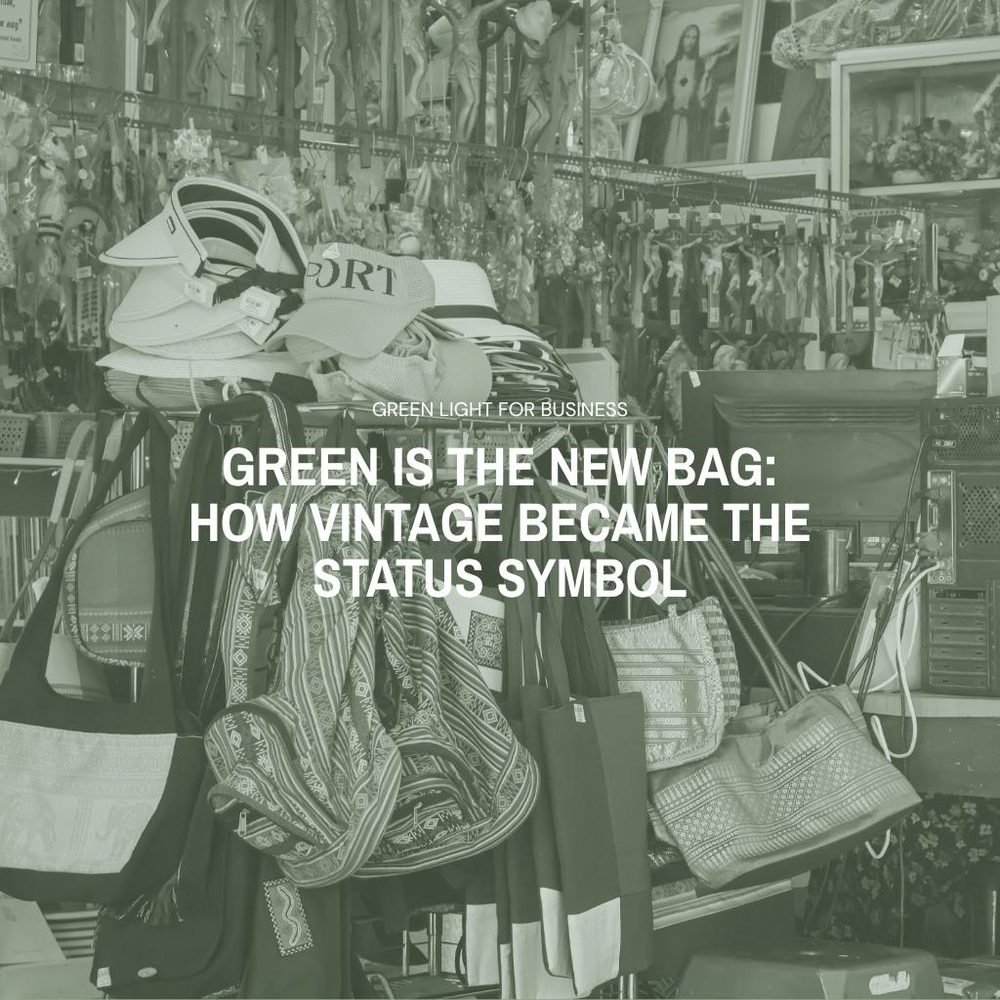
For many years, the rule of luxury fashion had been set in stone: new bags, high status. Nowadays, history is rewriting itself, as shoppers are turning to vintage and secondhand designs instead of new, expensive ones. Luxury handbag sales have gone down nearly 10% from their 2023 peak, costing sellers approximately USD 8 billion. In the meantime, searches for vintage bags on The RealReal, one of the biggest luxury resale platforms, soared by 131% in a single year, meaning that a new trendy bag might as well be from a different generation.
This transition is driven by a rapidly expanding market. Research and Markets states that the luxury resale market is expected to reach USD 41.61 billion by the end of 2026 and USD 60.11 billion by 2030, featuring a CAGR (Compound Annual Growth Rate) of 9.6%. Handbags lie at the center of this growth: among interviewed shoppers, resale makes up 28% of wardrobes, increasing to 40% for handbags.
Three factors explain why consumers are consciously making this switch. Firstly, there’s price, as vintage gives access to high-quality and fashionable designs for much less than boutique designs. Secondly, there’s identity. Living in a day and age where we notice patterns in which bags blow up on social media, those buying vintage can prove their knowledge of fashion history and set themselves apart from the crowd by setting their own trends. Third, and perhaps mostly importantly, there’s sustainability.
Milan, one of the global fashion capitals, is the perfect example to contextualize this trend. The Naviglio Grande hosts the Mercatone dell’Antiquariato on the last Sunday of each month, a market with more than 350 vintage sellers that stretches for about two kilometers along the canal, from Viale Gorizia to the Darsena. Antiques and vinyl are just small pieces of the puzzle, as Via Corisco and Via Paoli are specialized in selling quality vintage, such as bags, shoes, and retro clothing. The Navigli district is famous for its wide range of vintage shops, cafés, and ateliers, transforming secondhand shopping into a Sunday tradition for residents and tourists alike.
More than just a fashionable choice, vintage bags present a strong case for sustainability. According to the Leather Working Group, producing one square meter of finished leather emits about 22 kilograms of CO2 equivalent, largely due to livestock farming. Purchasing a recently-produced bag means adding onto this impact. A study by Vestiaire Collective revealed that reselling one Chanel bag equals saving around 32,000 liters of water, 220 kilograms of CO2, and 12 kilograms of waste. In the grand scheme of things, the Ellen MacArthur Foundation estimates that if we double the use of pre-owned goods, the fashion industry’s carbon emissions could be reduced by 44%.
Instead of seeing resale as competition, many brands and retailers have embraced it as part of their core business model. For instance, Gucci has now partnered up with Vestiaire Collective, allowing customers to trade in designated pre-owned items for store credit, while Alexander McQueen offers in-house authentication for its pieces listed on the same platform. It does not just stop at luxury goods. Fast-fashion brands such as Zara and H&M have established their own pre-owned marketplaces. As the secondhand market flourishes, so does brands’ desire to capture the value their products generate after the first sale.
Nevertheless, we must not forget that just because an item is vintage does not mean it is automatically green. A 2025 study published in Scientific Reports warns that behavioral effects such as rebound spending and moral licensing undermine the sustainable promise secondhand fashion holds: some shoppers feel good about buying secondhand that they start buying more. Vintage bags may have moved from thrift-store niche to mainstream appeal, but the real sustainability gain depends on the customer. When a secondhand bag replaces a new purchase rather than adding to a current one, it highlights a substantial step in how fashion continues to reinvent value, status, and responsibility.
The new rule of luxury is simple: the older the bag, the smarter the buy.
Written by Alberto Crisanaz
Bibliography:
- https://businessmodelanalyst.com/luxury-handbag-sales-vintage-resale-shift/
- https://www.researchandmarkets.com/reports/6009271/luxury-resale-market-report
- https://whereisthemarket.com/market/navigli-antique-market-milan/
- https://www.spotahome.com/it/blog/mercatini-usato-milano/
- indagare.com/shop/flea-market
- the-ethos.co/caring-for-your-leather-bag-is-the-most-sustainable-choice/
- revivebags.com/blogs/magazine/the-sustainable-appeal-of-luxury-second-hand-bags
- retaildive.com/news/resale-secondhand-dominates-retail/640588/
- thedrum.com/opinion/luxury-brands-are-teaming-up-with-resale-platforms-can-we-expect-resale-boom
- bspk.com/post/adapting-to-the-rise-of-secondhand-luxury-fashion
- fortune.com/2026/08/06/fashion-brands-resale-market/
- https://www.nature.com/articles/s41598-025-19089-1