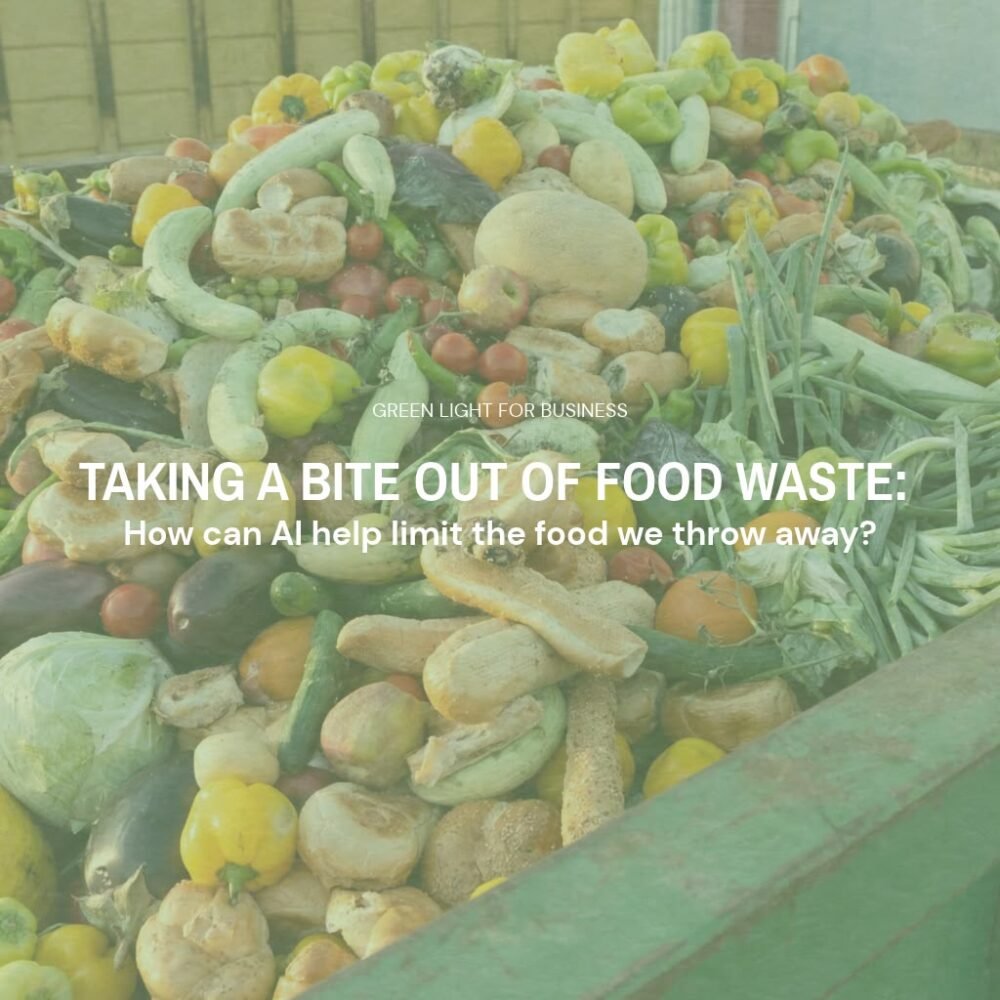
Food waste has become an ever-prevalent issue, both socially and environmentally. In the EU alone, over 58 million tons of food are thrown away each year, and globally, an average of one third of the food produced for human consumption is wasted. This adds up to a fiscal loss of over $1 trillion annually. Of course, the social impact of this waste is clear, as while a huge portion of perfectly edible food is discarded, 8.5% of the EU cannot even afford one quality meal a day, and over 650 million people worldwide suffer from malnutrition. According to UNEP, in theory we have the capacity as a society to produce enough food to sustain the global population. World hunger stems largely from these vast amounts of food that are wasted constantly, in addition to other issues such as inequality and infrastructure limitations.
Beyond the social impact, food waste is also a huge environmental issue. When all these tons of food end up in landfills, their decomposition leads to immense amounts of greenhouse gas emissions, particularly methane. In fact, food waste contributes to about 8% to 10% of global greenhouse gas emissions, which adds up to approximately 4.4 gigatons of methane annually. These emissions, of course, massively add to climate change, especially because methane is an extremely potent greenhouse gas. In addition, the overproduction and wastage of food also puts unnecessary pressure on natural resources, leading to deforestation and therefore more carbon capture on our planet, further contributing to global warming.
Clearly, food waste is a huge issue. But where does it actually come from? Food waste occurs at virtually every step in the supply chain, including inefficiencies at the household level, accounting for 50% of global food waste, restaurants, making up 25%, manufacturing, which accounts for 20%, and farms and supermarkets making up the rest. Essentially, at each of these channels, due to issues such as perishability, aesthetic standards, overbuying, poor planning, and technological incompetencies, tons of food are wasted. Having experience in the food service and restaurant industry myself, I have seen this food waste first hand. The sheer amount of food I have seen left over and discarded daily was jarring, simply due to overestimation of sales and misallocation of resources. Reducing this food waste would not only limit costs for restaurants by making their orders more accurate, but would also target the previously mentioned environmental issues.
So, how can we tackle this problem? There are already many companies and startups that have committed themselves to limiting food waste. Something that has become increasingly popular in Milan and around the world is the Too Good to Go app, which connects hungry (and broke) consumers with restaurants and vendors that have excess products, selling what would have been thrown away at a reduced price. Too Good to Go has already made a tremendous impact, helping save over 500 million meals globally and thereby avoiding around 1.3 million tons of greenhouse gas emissions. Other businesses such as FoodCloud, Orbisk, Crumbs, and NANDO have taken reducing food waste to the next level, using AI to mitigate wastage.
Nowadays, it seems as though AI has taken over every aspect of our lives, from job interviews to online searches to learning. While the negative environmental impacts of AI are well known, with the appetite of AI growing increasingly unsustainable (read our previous article!) with massive data centers consuming our resources, what if we could actually use AI to help fight against environmental issues?
By combining AI, machine learning, computer vision, and robotics, new fully automatic waste-tracking systems have begun to be implemented across hospitality and supermarkets. These systems reinvent waste, creating a circular system of not only sorting and disposal, but actually predicting quality management. Through imaging and electronic sensors, manufacturers and businesses are able to pinpoint where patterns of loss occur, allowing teams to then fix specific inefficiencies. AI can also be used to predict more accurate shelf-life under real-world conditions rather than nebulous estimates, through earlier spoilage detection, optimization of storage conditions, and improved demand and inventory forecasting. These systems can then be implemented directly into workflows and update dynamically as patterns emerge, allowing businesses to adjust their orders and operations to limit food waste. Another step up is the emergence of digital twins, which is essentially a continuously updated virtual representation of a product, allowing teams to see the item’s current quality and make earlier, more precise decisions in a more dynamic manner.
While this may seem like some far-away, utopic solution, these AI systems have already been successfully put into place. For example, Orbisk’s system called Orbi has been implemented on the Carnival Cruise line, acting as a command center for the kitchen in an industry infamous for producing large amounts of waste with their buffet-style dining. Orbi uses advanced image recognition to log everything that is being produced and thrown away, and then analyzes the data to recognize patterns for making more efficient future production and inventory decisions. Carnival’s usage of AI has helped teams align their supply to actual demand 17% more accurately, preventing massive amounts of unnecessary waste. Worldwide, Orbi has been implemented across cruise lines, hotels, hospitals, and more in 45 different countries, reducing an estimated 200 million kilos of food waste annually.
Beyond the restaurant and manufacturing industries, AI can also be implemented to limit household food waste through the creation of “intelligent” packaging that detects patterns in what is happening to food over the distribution process. AI is also being used to separate food scraps from regular waste in order to promote large-scale composting, moving our society towards a circular bioeconomy. While the negative environmental impacts of AI are apparent, in the end, it is clear AI is not going anywhere and will only become increasingly prevalent in our society. Instead of demonizing all AI usage, it is necessary that we think about how we can harness the power of AI and make it work for our environment, and reducing food waste is one of the most important ways we can start this process.
Written by Maia Sikora
Bibliography:
https://food.ec.europa.eu/food-safety/food-waste_en
https://www.ift.org/food-technology-magazine/reinventing-food-waste
https://www.nrdc.org/stories/food-waste-101#what-is
https://theinnovator.news/how-ai-is-helping-to-reduce-food-waste/