
A first assessment
Since the creation of the Agenda 2030, Sustainable Development Goals (SDGs) have been at the forefront of sustainability assessment. But what issues have organizations reported, involving SDGs implementation during the current pandemic? According to the United Nations Department of Social and Economic Affairs (UN DESA), the pandemic we seem to be almost over with, has affected in different manners stakeholders around the globe. However, the outcome of the research is that stakeholders’ engagement is crucial for SDGs employment during pandemic times more than ever.
Together in tough times
As the UN DESA report explains, 66% of stakeholders interviewed had taken part into a partnership as a response to the pandemic. Most organizations that have partnered in order to implement SDGs in face of adverse conditions have done so with NGOs, but it is interesting to note that the second place is occupied by private sector entities, signaling that the private sector is also contributing to SDGs implementation. A negative figure is that only around 18% of philanthropic organizations have been chosen as partners to implement SDGs. An aggregate change of the distribution of the agents involved in such tasks has not been experienced, however, leading researchers to think that relations have strengthened among existing networks, rather than expanded or shrunk. These results highlight once again how different stakeholders ‘ engagement is regarded as decisive in the application of SDGs.
SDGs impediments
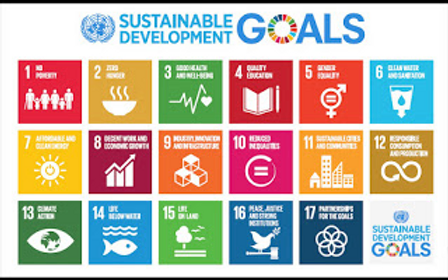
The activities that have been affected the most by the pandemic have been mobilization of funds for SDGs implementation and involvement of marginalized population groups in the economy. The first can be clearly explained by the global redirecting of funds towards the health sector and the medical research: even though the 3rd Goal “Good Health and Well-being” has been hindered by the pandemic it is also the one that has received the most funds, sometimes at the expense of other goals, mainly SDG 5 “Gender equality” and SDG 10 “Reduced Inequalities” as the research shows. In a context of global growth slowdown, the groups that are less productive have been affected the most, namely: Youth and Children and Older People. A statistic that challenges this trend is the heavy hit that was taken by the female population, that even if productive, was one of the most affected groups.
A Suggestions for a more sustainable recovery
As we are writing, the pandemic seems to be in its mature/decreasing phase and with the advancing of the vaccine campaign, it seems that we will be out of it in less than one year. As we look forward to the end of restrictions, it is wise to prepare for what will come afterwards, learning from the innovations achieved in the meantime. Indeed, the inclusion of SDGs in the agenda of various Recovery Plans is being applied by many organizations and countries. Here, again, geographical variability is observed: Oceanian countries have been the ones to make reference to SDGs the most in their government response projects, while Europe seems to be the one that has been referring to them the least. Nonetheless, as the Next Generation EU project has started, it is clear that the frame by which the European Union is allocating its resources is based on the same concepts found in the Agenda 2030 SDGs. A startling example of this is the allocation of circa 10 bln € as “Just Transition” Funds, for a more sustainable development across the EU.
Conclusion
According to the latest Stakeholders Publication released by UN DESA, Covid-19 has affected the implementation of SDGs: different agents have been affected differently but a constant is that stockholder engagement has been deemed as decisive. Nonetheless, as the end of the pandemic approaches, Sustainable Development Goals are being included in some of the Recovery Plans implemented in different countries: a significant sign of social and environmental progress. A duty that will be imposed on the civil society and, particularly, on our community is to hold corporations, governments and, above all, ourselves accountable for these goals.
SOURCES
“THE IMPACTS OF COVID-19 PANDEMIC ON STAKEHOLDER ENGAGEMENT FOR THE SDGs”, UN DESA